What is a day-one consideration set?
A day-one consideration set is the short list of vendors a buyer has in mind before they start formally researching. Bain & Company’s June 2026 analysis states that around 90% of buyers purchase from their Day 1 list, though it does not name the study behind that number. Bain also argues that most seemingly lost deals were never winnable, because the vendor was not on the buyer’s initial shortlist. The direction is consistent with what most B2B marketers see: by the time a buyer fills in your form, the choice is mostly made.
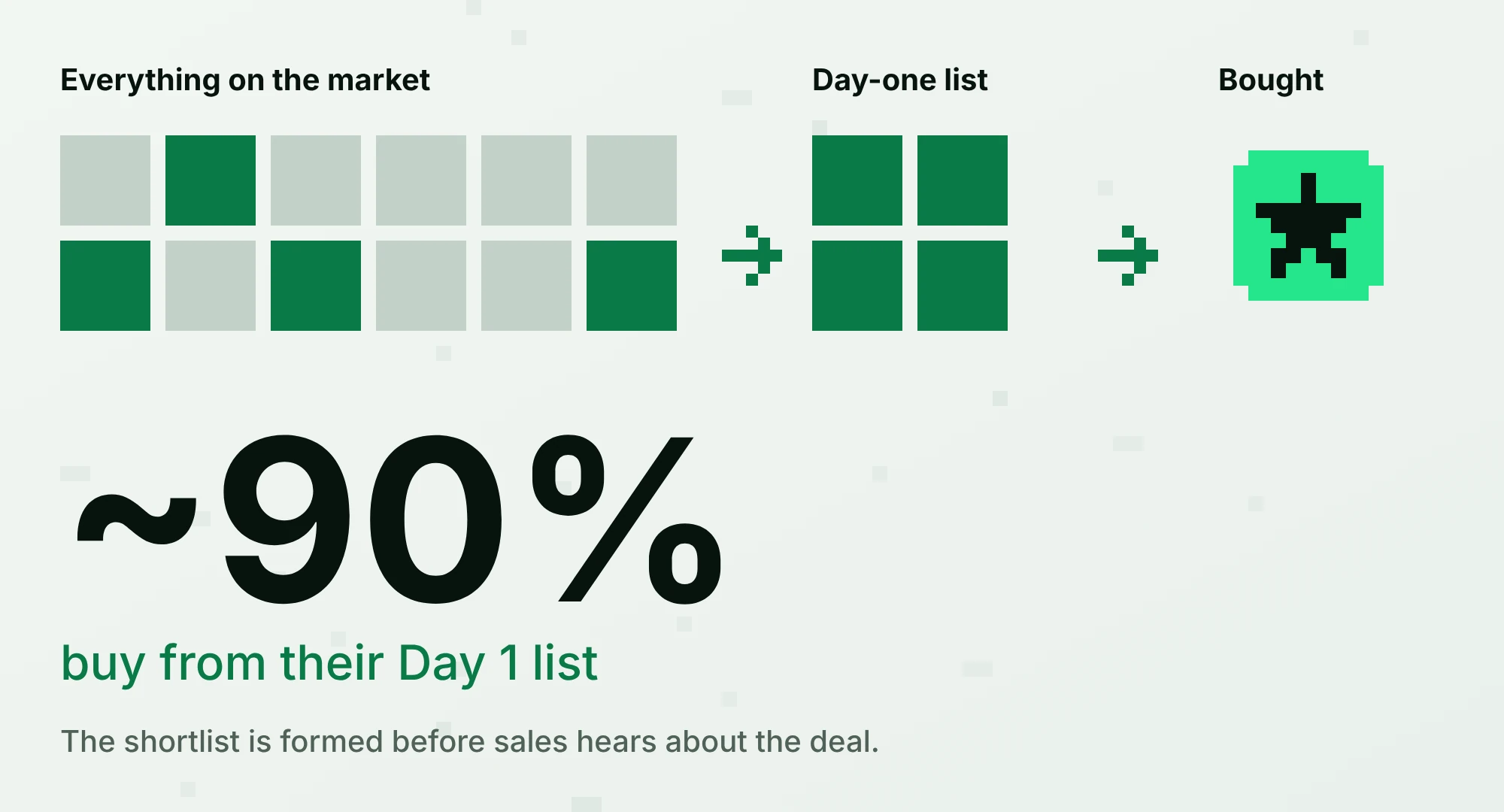
Add AI to this and the shortlist now forms in a conversation you cannot see.
Does AI shorten the buying journey?
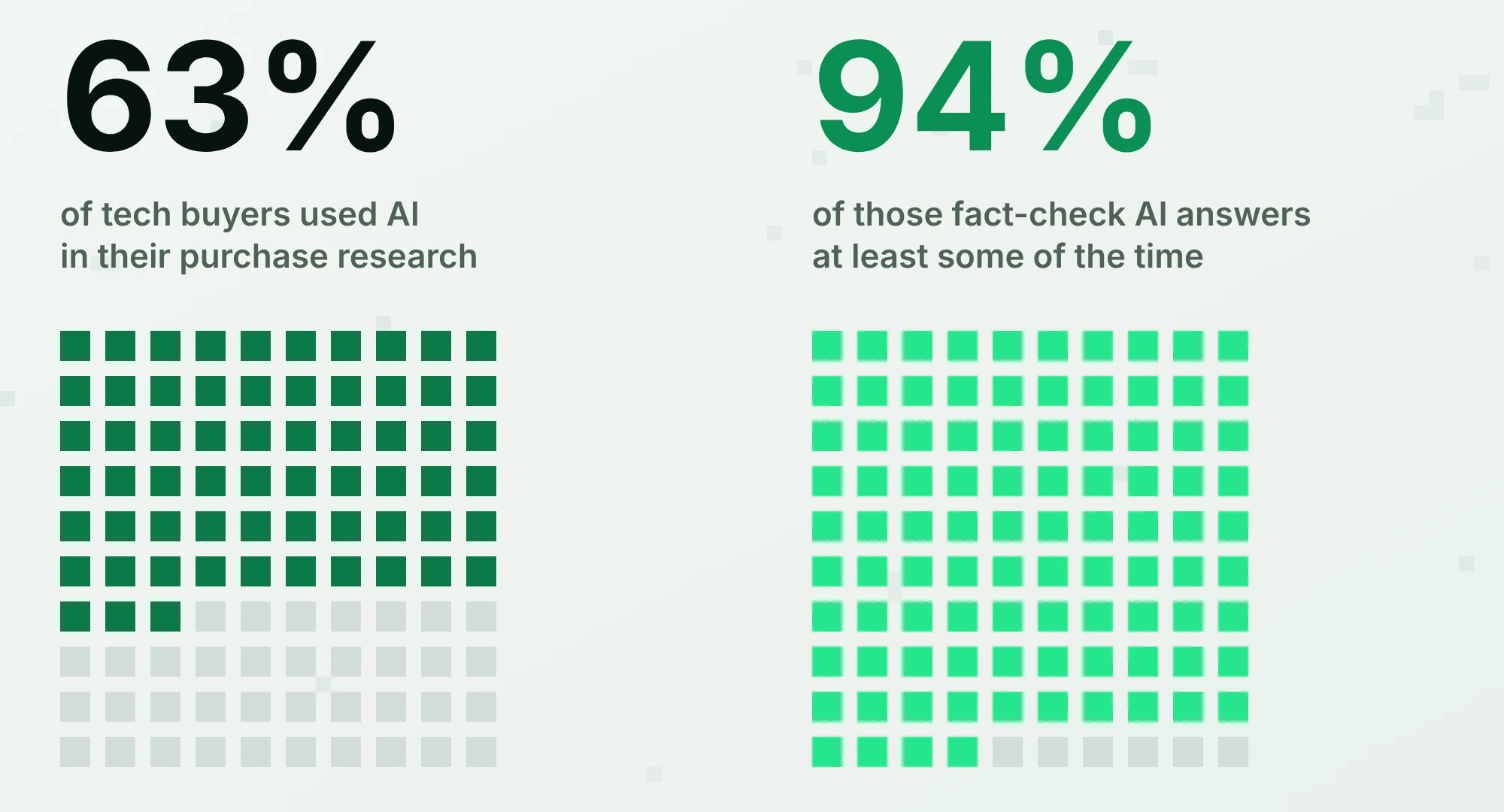
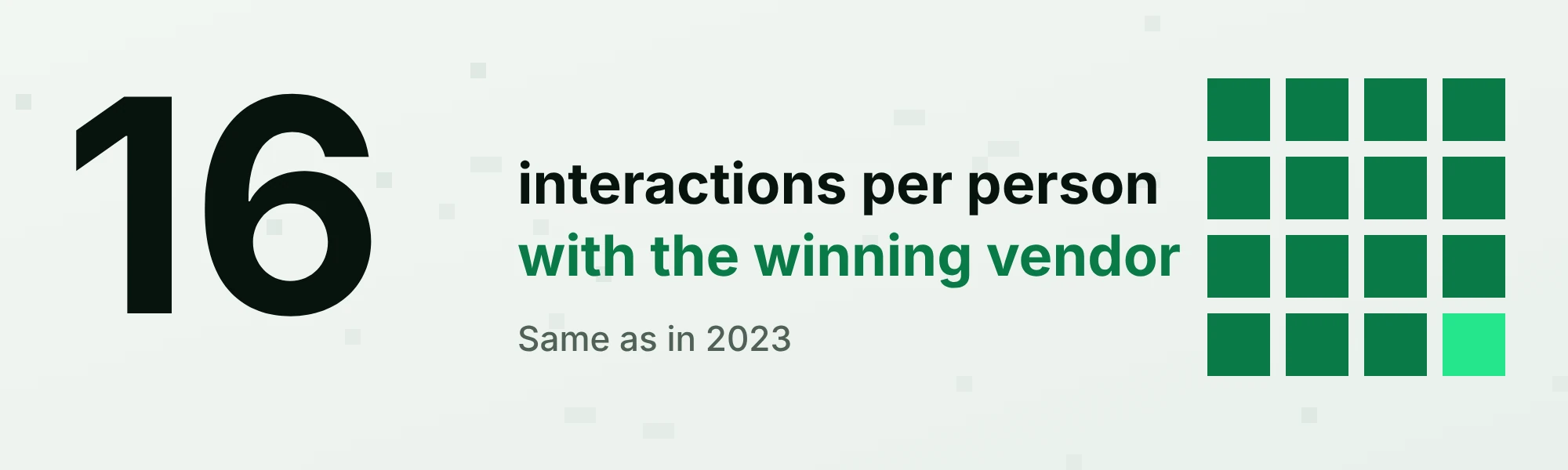
Not by much. It adds a verification step. TrustRadius’s 2026 B2B Buying Disconnect Report (1,862 technology buyers, surveyed in January 2026) found that 63% of buyers used AI in their purchase research, and 94% of those fact-check its answers at least some of the time. 6sense’s 2025 Buyer Experience Report found buyers still had 16 interactions per person with the winning vendor, the same as in 2023 and one fewer than in 2024. So AI changes where buyers verify, not how many touchpoints they have. The assistant gives a recommendation, then the buyer checks your site, a review platform, a colleague and a competitor.
This changes what each touchpoint has to do:
- Your site must confirm the AI’s summary of you, not contradict it.
- Review profiles must match your site on category, pricing model and who you serve.
- Your product information must be the same everywhere. Inconsistent facts make a buyer, and an AI engine, trust you less.
Why does brand beat clever tactics here?
AI engines recommend what the wider web agrees on. A page can be cited for a clean definition and still lose the recommendation to a competitor with more reviews, more press and more community mentions. You cannot fix that with a single blog post.
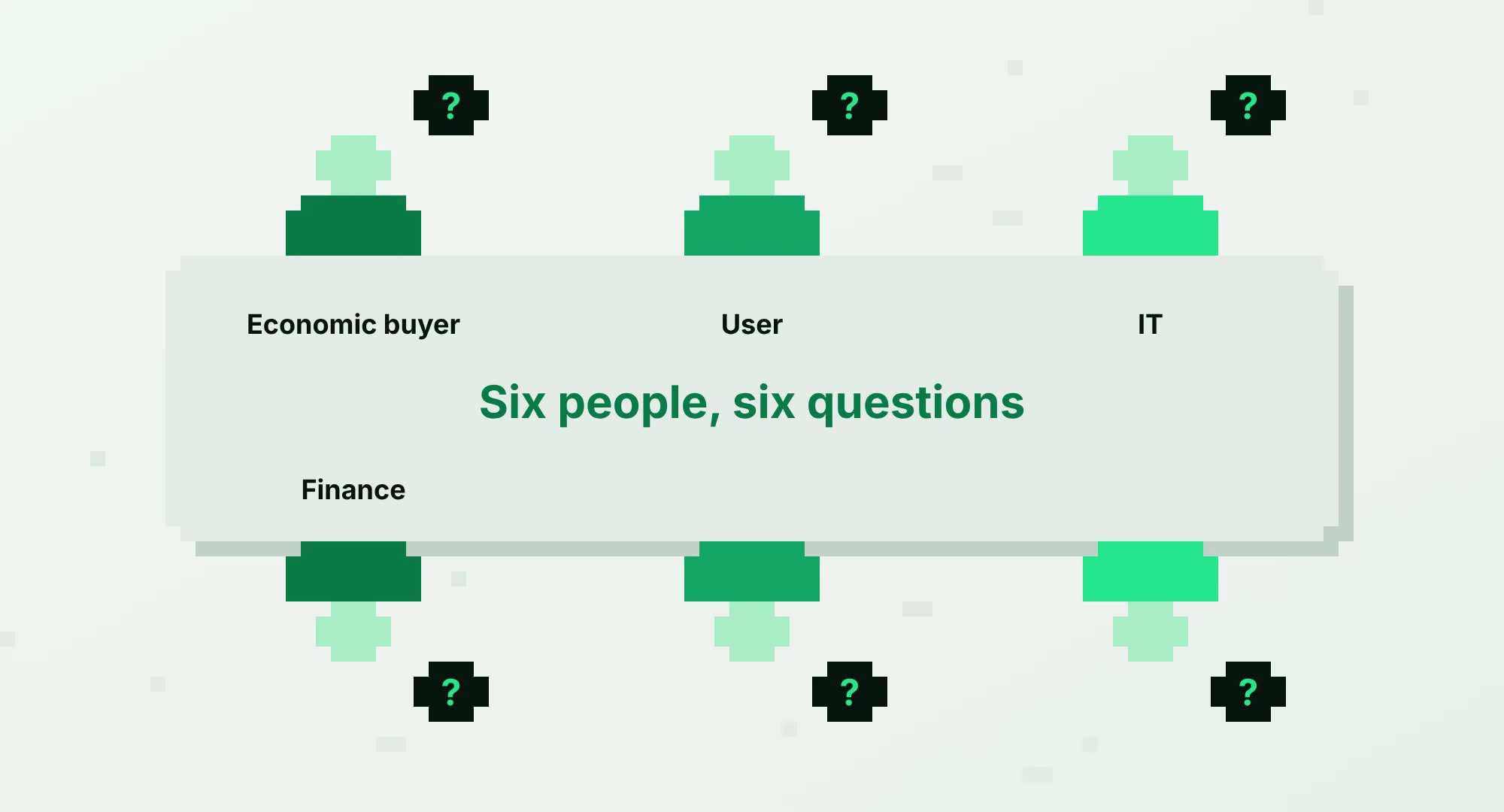
This is also where the consumer-style playbook falls short, because B2B purchases involve long sales cycles and buying groups. A B2B buying committee has six people with six questions, and each one may ask an AI a different version of it.
What should a B2B SaaS team do about it?
Four moves, none of which require a new tool:
- Define the one sentence you want an AI to say about you. Category, audience, and the problem you solve. Put it at the top of your homepage, your About page and your review profiles, word for word.
- Build for the buying committee. For each role (economic buyer, user, IT, finance), publish one page that answers that person’s top question directly, with numbers.
- Earn mentions you do not control. Podcast appearances, honest community answers, customer reviews, industry roundups. These count more than another post on your own blog.
- Measure on the buyer’s timeline. B2B sales cycles run for months, so a 30-day attribution window will undercount brand work. Match your window to your real sales cycle.
How do you measure brand when buyers research in the dark?
Use proxies, and say clearly that they are proxies.
| Signal | What it tells you | Where to get it |
|---|---|---|
| Self-reported source on demo forms | Which unseen channels buyers credit | Free-text field, read monthly |
| Branded search volume trend | Whether recall is growing | Search Console, Google Trends |
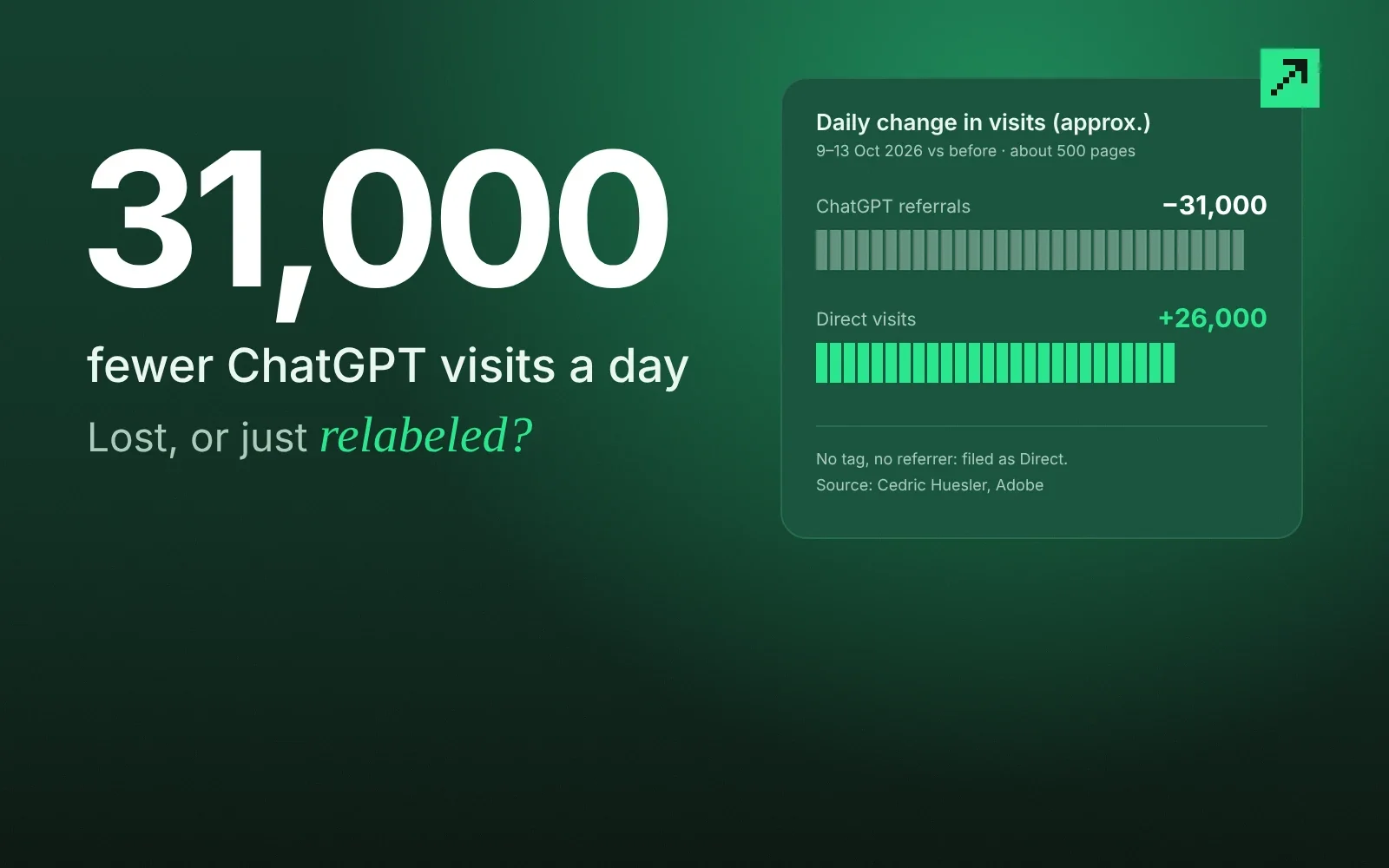
| Direct and non-homepage landing traffic | Possible AI or word-of-mouth visits | GA4 (see why ChatGPT traffic shows up as Direct) |
| AI answer checks | Whether you appear on shortlists | Monthly manual test of 20 queries |
| Sales-call question: “Who else were you considering?” | Who was on the day-one list | CRM notes |
None of these is precise. Together they are enough to defend brand spend in a budget meeting.
Does this mean performance marketing is dead?
No. It means performance marketing works best on top of a brand that already made the shortlist. Before spending more to get people in, check where your own pipeline breaks: if lead volume is healthy but deals stall after the first meeting, more ad spend will not fix it.
Sources
-
Bain & Company, Raising the Odds on a Deal: How Likelihood to Buy Rewires B2B Growth, 19 June 2026
-
TrustRadius, 2026 B2B Buying Disconnect Report, 15 July 2026
-
Related: How to get cited in Google AI Overviews, Claude or ChatGPT as a B2B company
Questions
What does "brand" mean in B2B SaaS?
It is the set of associations a buyer has with your company before talking to you: what category you are in, who you serve, whether peers trust you. It shows up as shortlist inclusion more than as logo recognition.
Can small SaaS companies compete on brand against larger rivals?
Yes, by being specific. A narrow, consistent position ("accounting automation for Nordic agencies") is easier for people and AI engines to remember than a broad one.
How is brand different from content marketing?
Content is one way brand gets built. Brand is the overall picture a buyer or an AI engine forms from your content, reviews, product and people. Content that contradicts the rest of that picture hurts it.
Is share of search useful for B2B?
It can be a rough signal of brand demand, but it measures search interest, not market share. Use it as one input, not a scorecard.